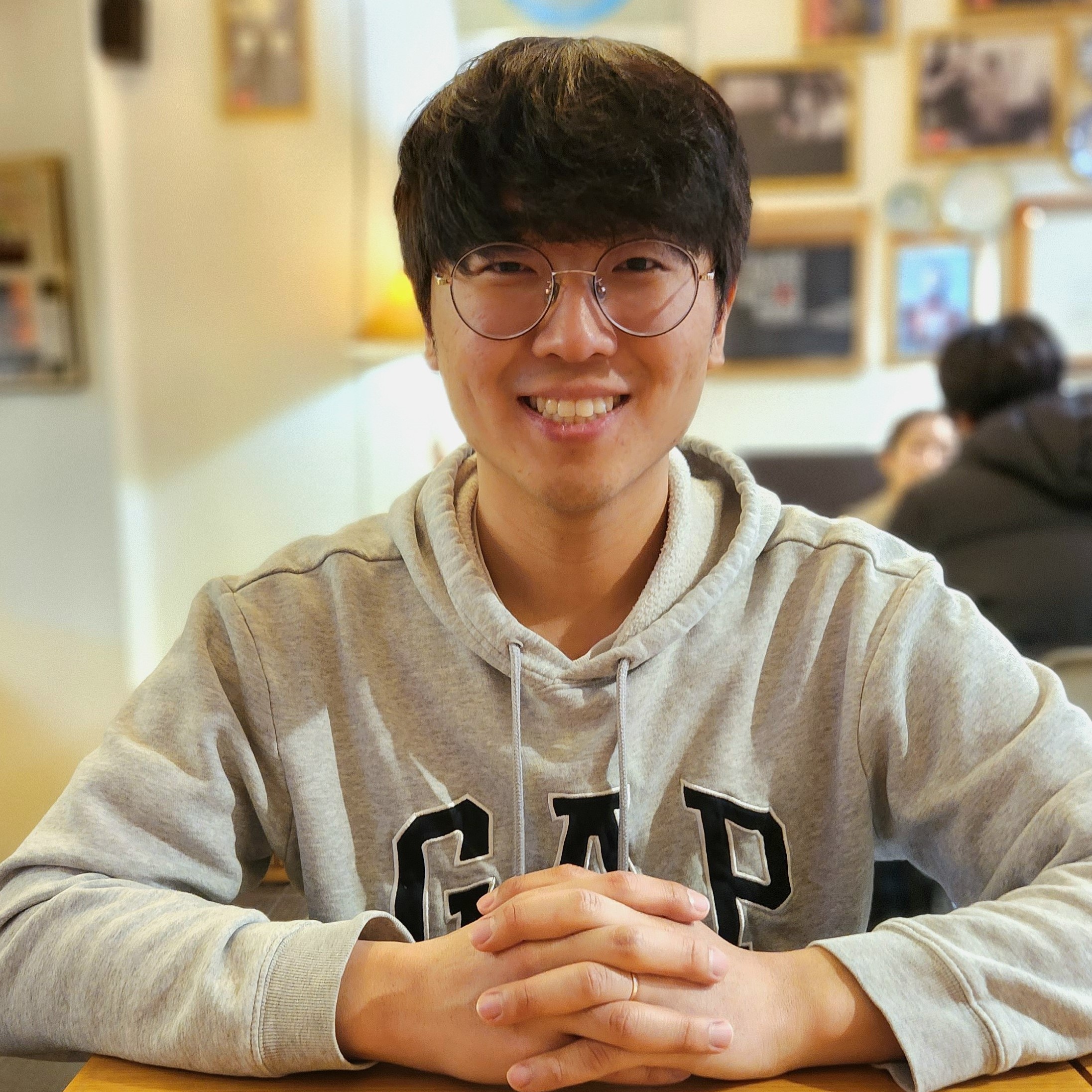
I am a Ph.D. candidate in Scalable Graphics, Vision, and Robotics (SGVR) Lab at KAIST advised by Prof. Sung-eui Yoon. I received my M.S. degree in Computer Science from KAIST and received my B.S. degree in Computer Science from KAIST in 2021 with minor in Electrical Engineering. I am also a recipient of the Qualcomm Innovation Fellowship 2023. I also work closely with Prof. Sooel Son and Kyle Min.
My research aims to build trustworthy and controllable AI systems that people can rely on in the real world. AI models are developed in ideal settings, but once deployed they often fail under non-ideal conditions such as adversarial attacks, unclear user instructions, and uncontrollable, non-transparent outputs. My work centers on failure localization, the idea of pinpointing where an AI system goes wrong and repairing only those parts. Guided by this idea, I have developed robust, secure, transparent, and controllable AI across computer vision, 3D vision, language models, and embodied agents. Going forward, I aim to build agentic and physical AI systems that can find and fix their own failures.
Contact
-
wkim97 [at] kaist.ac.kr
-
Bldg E3-1, Rm 3446, 291 Daehak-ro, Yuseong-gu, Daejeon, Korea, 34141
Education
-
B.S. in Computer Science, KAIST
- Minor in Electrical Engineering
Sep. 2016 - Feb. 2021
Industry Experience
-
Research Intern, NAVER LABS
- Mentor: Jinhan Lee
- Collaborators: Kisung Kim, Daejung Kim
- Topic: Vision-Language Navigation under imperfect user instructions
Apr. 2026 - Oct. 2026